If you’ve looked into selling crochet on Facebook Marketplace, you’ve probably heard the stories: someone comments “Is this available?” and then immediately pushes the seller to accept a payment method that leaves them completely unprotected.
Right now, there’s an epidemic of scammers targeting handmade sellers on Facebook Marketplace, in buy/sell groups, and even in Instagram DMs. They use the same scripts, the same pressure tactics, and the same payment traps — and crochet sellers are one of their favorite targets.
The good news? You don’t need to be paranoid to stay safe. You just need a simple seller-safety system you follow every time.
This guide walks you through:
A step-by-step checklist you can use for every sale
The most common scam tactics targeting crochet sellers
Red flags to watch for before accepting payment
The safest ways to get paid online
You are not ‘being difficult’ by protecting your business—you are being professional.
– Pamela Grice, The Crochetpreneur
Why Crochet Sellers Are Targeted (and Why It’s Not Your Fault)
Handmade sellers are especially vulnerable because:
- Your items feel personal (you want to be kind and accommodating).
- Many sales happen informally in messages instead of a protected checkout.
- Scammers know sellers may not understand chargebacks, “proof of delivery,” or app-specific rules.
The FTC specifically warns that online selling scams often involve risky payment methods, overpayment schemes, and requests for verification codes.
The Most Common Crochet-Selling Scams on Facebook
1. “Pay via Venmo/Zelle/Cash App — I’ll send it right now”
Scammers push fast, person-to-person payments because those systems are often intended for people you know—not transactions with strangers. For example, Chase explicitly warns that Zelle is not intended for purchases of goods from online marketplaces or social media.
Why it’s dangerous: even when money appears to “arrive,” the payment can later be disputed (or the “proof” is fake).

2. Fake Payment Screenshots or Emails
The buyer sends:
- A screenshot claiming payment was sent
- A fake “payment confirmation” email
- A message saying funds are pending until you ship
Facebook warns that scams often involve screenshots and suspicious behavior.
Rule:
Never rely on screenshots. Only trust payment confirmation that appears directly inside the payment app or checkout platform.
3. “You Need to Upgrade Your Account” Scams
They claim you must:
- Upgrade to a business account
- Pay a fee to “unlock” the payment
- Verify your account to receive funds
Legitimate payment platforms do not require sellers to send money in order to receive money.
The FTC also warns against sharing verification codes or doing unusual “verification steps” for strangers.
4. Overpayment + Refund Scams
The buyer “accidentally” sends too much money and asks you to refund the difference quickly.
Often the original payment is fraudulent, and when it’s reversed, you’re left without the item and the refund you sent.
5. “I’ll Send Someone Else to Pick It Up”
Sometimes harmless — sometimes paired with rushed payments, strange instructions, or refusal to use protected payment methods.
If multiple red flags show up at once, walk away.
Facebook recommends canceling the transaction if you see suspicious activity and stopping communication.
Major Red Flags Crochet Sellers Should Never Ignore
Pause or decline the sale if you notice:
- They want to move off Facebook Messenger immediately
- They won’t answer simple questions (size, color, pickup time)
- They pressure you (“I can pay right now—send your email/phone”)
- They refuse protected payment methods
- They send screenshots instead of real confirmations
- They ask for a verification code (Google Voice, “6-digit code,” etc.) Consumer Advice
- They want you to pay anything to receive money
- They want shipping but avoid tracked shipping / a real checkout
Trust your instincts. A legitimate buyer will respect your boundaries.
Boundaries Are a Business Skill
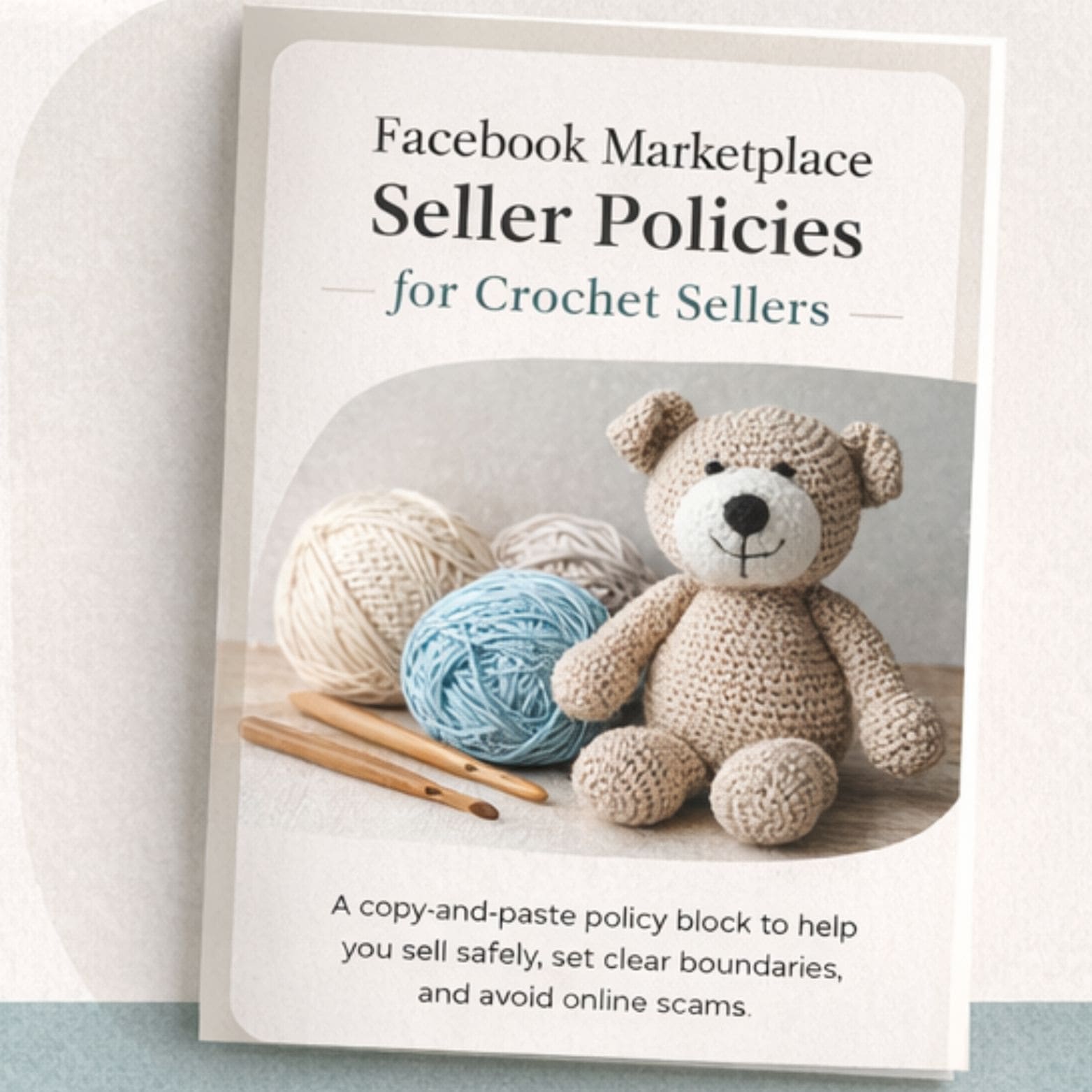
This free seller policies template gives you language you can confidently stand behind. It’s written to sound kind, professional, and clear, while still protecting you from unsafe payment situations and common online scams.
The Safest Ways to Get Paid for Crochet Items Online
Option A: Use a platform checkout with built-in protections
If you can, route the buyer to:
- your Etsy listing
- your Shopify/website checkout
- another real checkout flow you control
This keeps the transaction “clean,” documented, and tied to shipping proof.
Option 2: PayPal Goods & Services
If you accept PayPal:
- Always use Goods & Services, never Friends & Family
- Ship only to the address shown in the transaction
- Use tracked shipping
Seller protection depends on following these steps exactly.
You can also reference PayPal’s Seller Protection terms directly when you set your policies.
Option 3: Venmo (With Caution)
Venmo offers limited seller protection for qualifying transactions. Protection depends on:
- How the payment is sent
- Proof of fulfillment
- Transaction eligibility
Never assume all Venmo payments are protected. Check out Venmo’s article on seller protections.
In-Person Sales
Cash or card readers are safest for local pickup.
A Simple Seller Safety System for Every Crochet Sale
Step 1: Keep Everything in Writing
Keep conversations inside Messenger when possible. Save screenshots if needed.
Step 2: Confirm the Order Clearly
Send one message confirming:
- Item name or photo
- Price
- Pickup or shipping method
- Timeline
Step 3: Choose a Safe Payment Method
Priority order:
- Website or Etsy checkout
- PayPal Goods & Services
- Venmo only if eligible for protection
- Cash for local pickup
Step 4: Always Use Tracking for Shipped Orders
Tracking protects you, not just the buyer.
Step 5: Cancel If Anything Feels Off
You are never obligated to complete a sale that feels unsafe.
Copy-and-Paste Scripts for Sellers
Payment Boundary Script
“Thanks for your interest! For both of our protection, I only accept payment through [my website / Etsy / PayPal Goods & Services]. I’m happy to send the link.”
Screenshot Response
“Thanks! I’ll mark this sold as soon as the payment shows as completed inside the app.”
Email or Phone Request Response
“I don’t share additional contact info for payments. I can send a secure checkout link instead.”
Upgrade Fee Response
“I’m not able to pay fees or upgrades to receive payment. I can take payment through my checkout link.”
What to Do If You’ve Already Been Scammed
- Stop communicating with the buyer
- Report the profile and messages
- Contact the payment platform immediately
- Save all screenshots, receipts, and messages
- File a report with appropriate consumer protection agencies if needed
Acting quickly improves your chances of recovering funds.
Quick FAQ
What’s the safest payment method for Facebook crochet sales?
A secure checkout platform or PayPal Goods & Services offers the strongest seller protection.
Is Zelle safe for selling crochet online?
Zelle is intended for sending money to people you trust, not for online sales with strangers.
What’s the biggest scam red flag?
Any request that pressures you to accept unsafe payment methods or asks for verification codes.
Should I ever ship without tracking?
No. Tracking is essential for seller protection.
Seller Safety Checklist
⏹️ Buyer communicates clearly and normally
⏹️ Payment method includes seller protection
⏹️ No screenshots or upgrade fees
⏹️ No verification code requests
⏹️ Tracking used for shipped orders
⏹️ You feel confident proceeding
Final Thoughts
Selling crochet online should feel empowering, not stressful.
Clear seller policies aren’t about expecting the worst from buyers — they’re about creating a business that feels steady, professional, and safe for you. When your boundaries are visible upfront, you spend less time explaining, less time negotiating, and far less time worrying about whether a transaction will go sideways.
Remember: good buyers respect clarity. The right customers don’t need convincing — they appreciate knowing exactly how to work with you.
If you’d like to make this easier on yourself, I’ve created a free, copy-and-paste Seller Policies swipe file designed specifically for crochet sellers using Facebook Marketplace and social media. You can drop it straight into your listings and let it do the boundary-setting for you.
👉 Get your free Seller Policies swipe files here:
https://montygal.activehosted.com/f/367
Because protecting your business isn’t being difficult — it’s being intentional. And intentional sellers build businesses that last.
Want more tips and encouragement? Subscribe to the Crochetpreneur podcast, join the Crochet Business Chat Facebook group, and keep learning how to turn your passion into profit—one stitch at a time.
Ready to scale your crochet business, or simply want to stay inspired? Share your thoughts below and join the conversation!